
The Uncomfortable Truth About Chatbots
We are living through the "Honeymoon Phase" of Generative AI. For the last two years, the world has been mesmerized by the magic of the blinking cursor in a chat box.
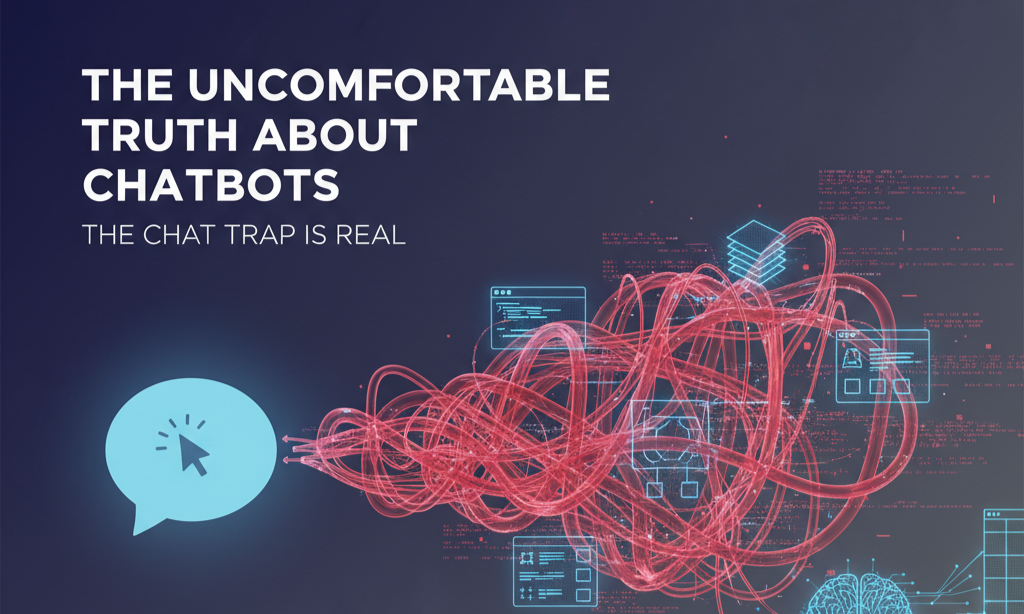
But as we look toward 2026—a year analysts predict will define "AI Pragmatism"—we are hitting a wall. We are realizing that the chat interface (UI) is actually a bottleneck for complex work.
Think about it:
- Chat is Ephemeral: It flows linearly and disappears upward. It is designed for "talking," not "building."
- Chat is Unstructured: It mixes your instructions, the AI's reasoning, and the final output into one messy stream.
- Chat is Isolated: It lives outside your actual work environment.
We call this the "Chat Trap." We are trying to force-fit complex workflows—like coding apps, writing research papers, or managing projects—into a narrow text box designed for casual conversation.
First Principles: How Humans Actually Think
To build the next generation of AI tools, we went back to first principles. How do humans solve complex problems?
We don't just talk. We write. We sketch. We organize. We create documents. Documents are "Structured Thought." They have hierarchy, permanence, and context. They are the canvas where ideas turn into plans.
If the document is where thinking happens, then why is the AI sitting outside in a separate window?
The Paradigm Shift: From "Chatting With" to "Working Alongside"
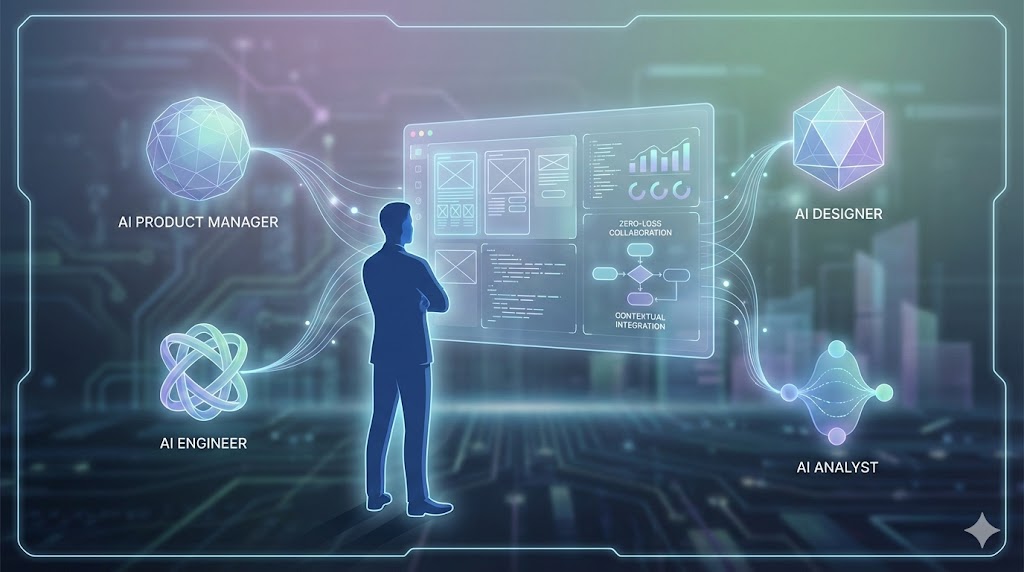
At Paiteams, we are betting on a different future. We believe the dominant AI interface of 2026 won't be a chatbot; it will be a Collaborative Workspace.
We didn't build a chat app. We built a note-taking platform where AI Agents are first-class citizens.
In Paiteams, the interaction model shifts:
- Don't Ask, Invoke: Instead of typing a long prompt into a void, you type
@inside your project document. - Don't Chat, Construct: When you call an Agent (like
@WebDevor@Strategist), it doesn't just "reply." It contributes. It adds a code block, inserts a table, or refines a paragraph directly within your document structure. - Don't Context-Switch, Flow: The AI sees what you see. The document is the context.
The "Canvas" vs. The "Feed"
The difference is subtle but profound.
In a Feed (Chat), the value is transient. You get an answer, copy it, and leave. The value chain is broken. In a Canvas (Paiteams), the value is cumulative. You, your team, and your AI Agents are all adding layers of value to a persistent object.
Imagine writing a PRD (Product Requirements Document).
- The Old Way: Chat with GPT-4 -> Copy text -> Paste to Notion -> Chat again for edits -> Copy back.
- The Paiteams Way: Write the header.
@MarketAgentfills in the market analysis section.@TechLeadAgentreviews it and adds technical constraints in a comment. You refine the strategy. The document grows organically.
Conclusion: The OS for the AI Era
We are moving past the novelty of "talking to a computer." We are entering the era of integrated intelligence.
The winners of the next cycle won't be the ones with the smartest chat models. They will be the ones who build the best environment for humans and AIs to co-create.
Stop chatting. Start building.
Experience the post-chat era at Paiteams.com