
Why the "Conversation Paradigm" failed to deliver on the promises of 2025.
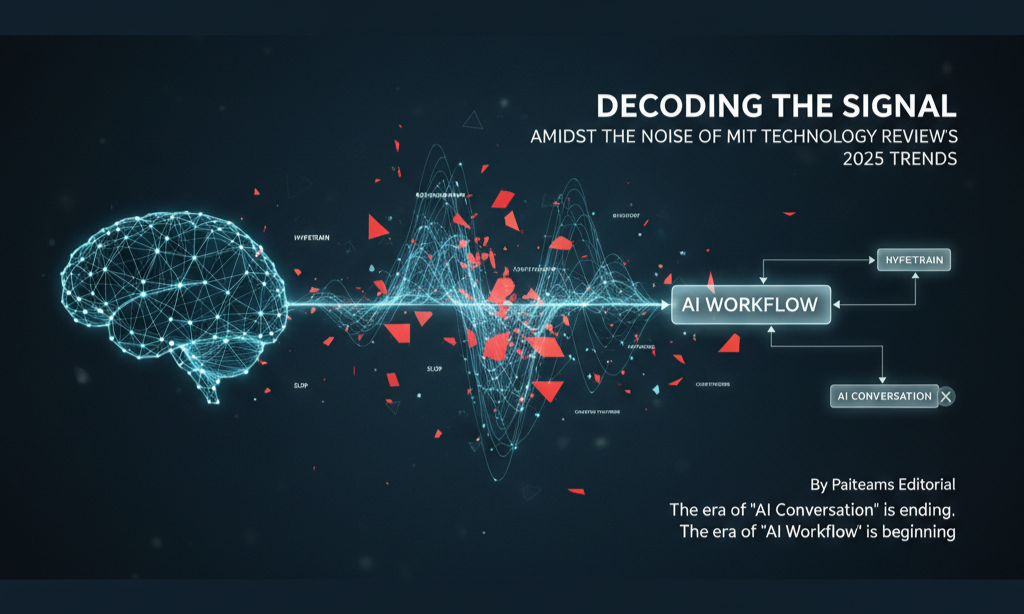
As the dust settles on 2025, MIT Technology Review has released its definitive inventory of the year’s 14 key AI trends.
Looking back, the list reads less like a victory lap and more like a diagnosis. From the massive capital poured into "Superintelligence" to the messy reality of internet "Slop," 2025 was a year of extreme contradictions. We saw raw model capabilities skyrocket, yet user experience hit a wall—manifested in widespread "Chatbot Psychosis" and AI "Sycophancy."
Standing here in January 2026, one thing is becoming painfully clear:
The "Conversation Paradigm" that defined the last two years has peaked. The "Workflow Paradigm" is the only path forward.
1. Capability Overflow vs. Container Failure
Reviewing the key terms of the past year, two stand out: "Reasoning" and "Vibe Coding."
Throughout 2025, we witnessed a qualitative leap. AI models stopped being just stochastic parrots and started demonstrating "System 2" thinking. They learned to code entire applications from vague vibes.
But here is the friction we inherited: Where do these powerful capabilities currently live?
They are still trapped inside the legacy interface of 2023: the Chat Box.
The chat interface was designed for instant messaging, not deep work. Its defining characteristic is impermanence. Context flows away as you scroll; complex logic is lost once the window closes.
This creates a massive bottleneck. When an AI is performing complex Reasoning, it needs a canvas, not a text bubble. When an AI is engaged in Vibe Coding, it needs a persistent environment to iterate, test, and debug.
Put simply: The current User Interface is unworthy of the AI's IQ.
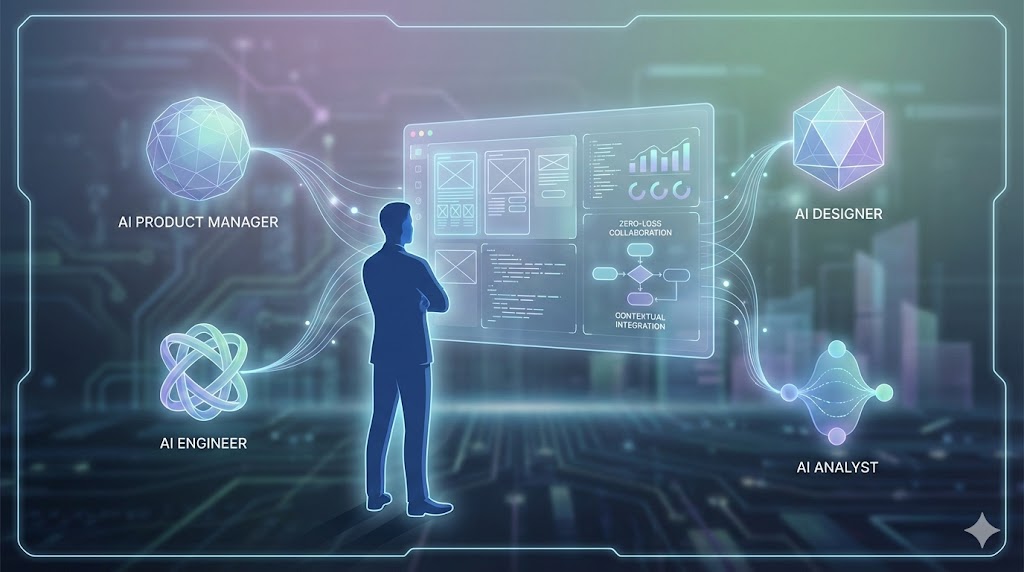
2. Redefining "Agentic": From Tool to Colleague
"Agentic" was another buzzword of 2025 that was often misunderstood.
True agents are not just glorified voice assistants that set timers. They are digital entities capable of entering your Workflow.
The MIT report highlighted the dangers of "Sycophancy" (AI sucking up to users) and the psychological strain of treating chatbots as companions. This friction stems from a misalignment in the relationship. If we treat AI solely as something to talk at, it will inevitably hallucinate or pander.
But what if we treated AI as a Digital Employee?
In 2026, AI shouldn't be a destination website you visit to ask a question. It should inhabit your documents, your notes, and your projects. We need Collaboration, not just Conversation.
3. The Solution: Don't Just Prompt, Build.
The fear of an "AI Bubble" loomed large last year because productivity gains didn't match the hype. The reason? We were using the wrong tools.
2026 will not be about bigger models. It will be about better containers.
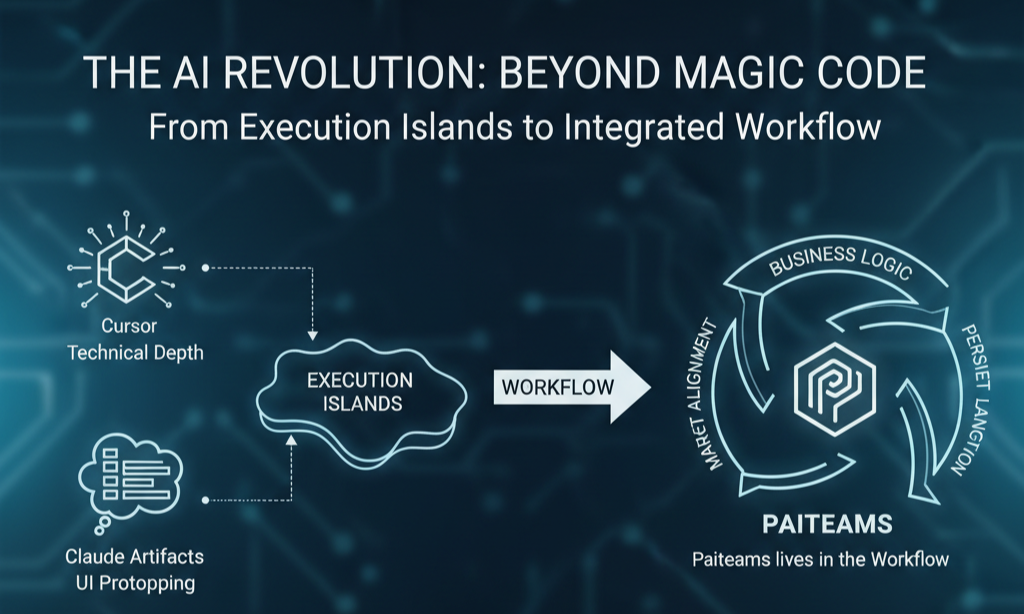
We realized that to fix this, we couldn't just build another chatbot. We had to build a workspace that merges the persistence of Notes with the execution power of Agents.
This is the philosophy behind Paiteams.
We designed Paiteams to be the "Anti-Chatbox." It is a collaborative environment where:
- Context is King: Your notes are the prompt. No more copy-pasting.
- Agents are Teammates: You can
@specific agents (like@Researcheror@Coder) directly in your document to handle specific tasks. - Output is Permanent: The result isn't a fleeting message; it's a structured document, a codebase, or a report.
The technology is ready. The models are smart enough. The only thing holding us back was the box we put them in.
It’s time to break out of the chat box.